eco-friendly landscaping ideas
Sustainable landscaping isn’t a trend anymore. It’s quickly becoming the standard for homeowners who want a beautiful yard without an unsustainable water bill or a constant maintenance treadmill. The good news is that eco-friendly landscaping doesn’t mean sacrificing curb appeal. With the right plant choices, smart irrigation, and thoughtful hardscape integration, you can build an outdoor space that’s both stunning and genuinely good for the planet.
Sustainability has been part of our mission at GreenGrove Outdoors since day one. From organic treatments to battery-powered equipment, we build eco-conscious landscapes throughout Tinton Falls and the surrounding New Jersey communities. Here are the eco-friendly landscaping ideas we recommend most to homeowners ready to make the switch.
1. Choose Drought-Resistant, Native Plants
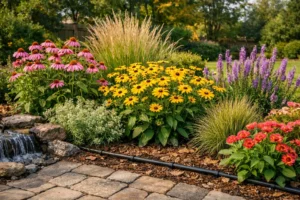
Native and drought-tolerant plants are adapted to New Jersey’s natural rainfall patterns, which means they need far less supplemental watering than non-native ornamentals. Great options for our region include:
- Black-eyed Susans
- Switchgrass and other native ornamental grasses
- Eastern red cedar
- Coneflowers
- Bayberry shrubs
Native plants also support local pollinators like bees, butterflies, and birds, creating a healthier micro-ecosystem right in your backyard. The Native Plant Society of New Jersey is a great resource for browsing region-specific species before your next planting project.
2. Install Smart, Water-Efficient Irrigation
Traditional sprinkler systems waste a lot of water through overspray and watering on a fixed schedule regardless of actual need. Smart irrigation systems use soil moisture sensors and weather data to water only when necessary, cutting water use by up to 30 to 50 percent in many cases.
Combine smart irrigation with drip lines for garden beds, rather than overhead spray, and you eliminate even more waste, since drip systems deliver water directly to plant roots instead of letting it evaporate into the air.
3. Reduce Turf Area Where It’s Not Needed
Lawns are thirsty. Every square foot of turf you replace with native groundcover, mulch beds, or hardscaping is a square foot that no longer needs weekly watering, mowing, and fertilizing. Many homeowners are shrinking high-maintenance lawn areas in favor of:
- Expanded garden beds with native perennials
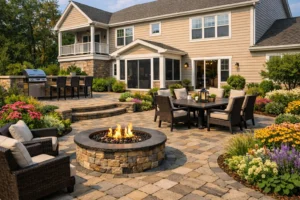
- Permeable paver patios for entertaining space
- Mulched pathways through wooded property edges
- Ground-cover plantings on slopes prone to erosion
4. Use Permeable Hardscaping
Traditional concrete and asphalt prevent rainwater from soaking into the ground, sending it straight into storm drains and contributing to runoff pollution. Permeable pavers, by contrast, allow water to filter through and recharge the groundwater table naturally, reducing erosion and easing pressure on municipal stormwater systems.
This is especially valuable for driveways, walkways, and patios on properties that already struggle with drainage, since permeable hardscape can become part of the solution instead of adding to the problem.
5. Switch to Organic Treatments and Battery-Powered Equipment
Synthetic fertilizers and pesticides can run off into local waterways, harming fish and aquatic plant life. Organic, slow-release fertilizers feed your soil’s natural biology instead of just force-feeding your grass, which leads to healthier turf over time with fewer chemical inputs.
We’ve also shifted much of our own equipment fleet to battery-powered tools, cutting emissions and noise pollution compared to traditional gas-powered landscaping equipment. It’s a small change, but it adds up across hundreds of properties.
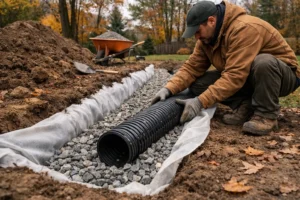
6. Add Rain Gardens and Bioswales
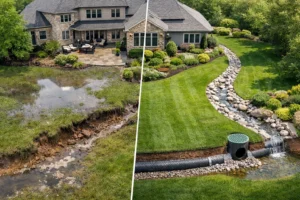
A rain garden is a shallow, planted depression designed to capture and filter stormwater runoff from your roof, driveway, or patio before it reaches storm drains. Planted with moisture-loving native species, a rain garden turns a potential drainage headache into an attractive landscape feature that actively improves local water quality.
7. Mulch Strategically
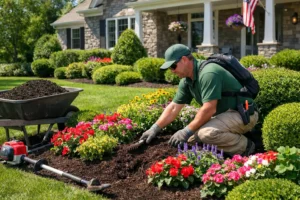
A 2 to 3 inch layer of organic mulch around trees, shrubs, and garden beds dramatically reduces water evaporation from soil, suppresses weeds (cutting down on herbicide use), and slowly improves soil health as it breaks down. It’s one of the simplest, most cost-effective eco-friendly landscaping upgrades available.
The Long-Term Payoff of Sustainable Landscaping
Eco-friendly landscaping isn’t just good for the environment, it’s good for your wallet too. Homeowners who invest in native plantings, smart irrigation, and reduced turf areas typically see:
- Lower water bills
- Reduced lawn care and fertilizer costs
- Less time spent mowing and maintaining high-upkeep turf
- Increased property value, as buyers increasingly prioritize low-maintenance, sustainable landscapes
Build Your Sustainable Landscape with GreenGrove Outdoors
Since 2012, GreenGrove Outdoors has helped homeowners and commercial properties throughout New Jersey design landscapes that are as practical as they are beautiful. Our team can assess your current yard and recommend a phased plan to reduce water use, cut maintenance costs, and create a more sustainable outdoor space without sacrificing the look you want.
Browse our eco-friendly landscaping services to learn more about our sustainable approach, or request your free consultation today. Call (732) 493-8093 or email info@ggoutdoors.net to start planning a greener yard for next season.