
Transform your outdoor space with professional landscape design and installation services in Monmouth County, NJ. GreenGrove Outdoors creates beautiful, functional, and sustainable landscapes for commercial properties, office campuses, retail centers, HOA communities, and residential developments.
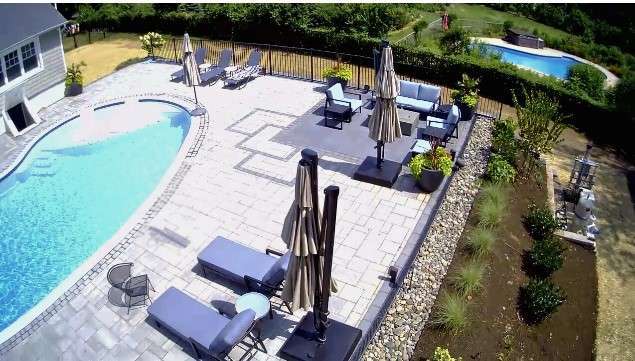
A professionally designed landscape creates lasting impressions while increasing property value, functionality, and long-term enjoyment. At GreenGrove Outdoors, our landscape design and installation services combine creativity, horticultural expertise, and premium craftsmanship to create outdoor environments that stand out.
Whether you need a complete landscape transformation, a commercial landscape installation, seasonal planting upgrades, or a custom outdoor living area, our team develops personalized solutions designed around your property's goals and aesthetic preferences.
With over 40 years of experience serving Monmouth County, New Jersey, we understand local growing conditions, plant varieties, drainage requirements, and sustainable landscaping practices that ensure long-term success.
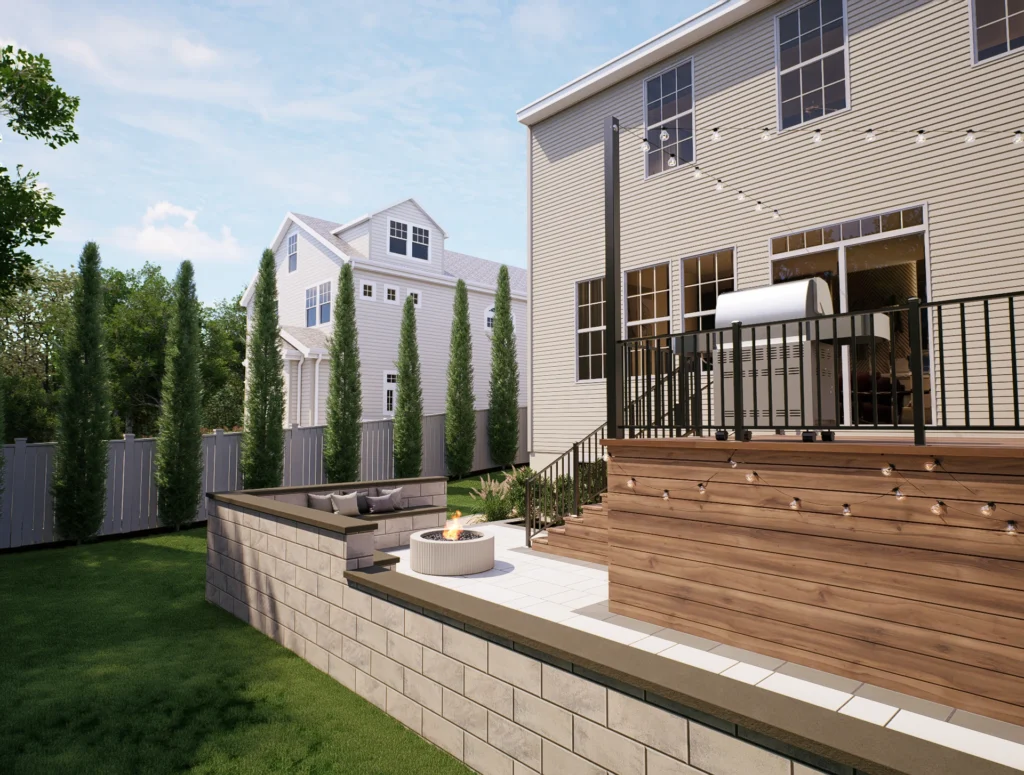
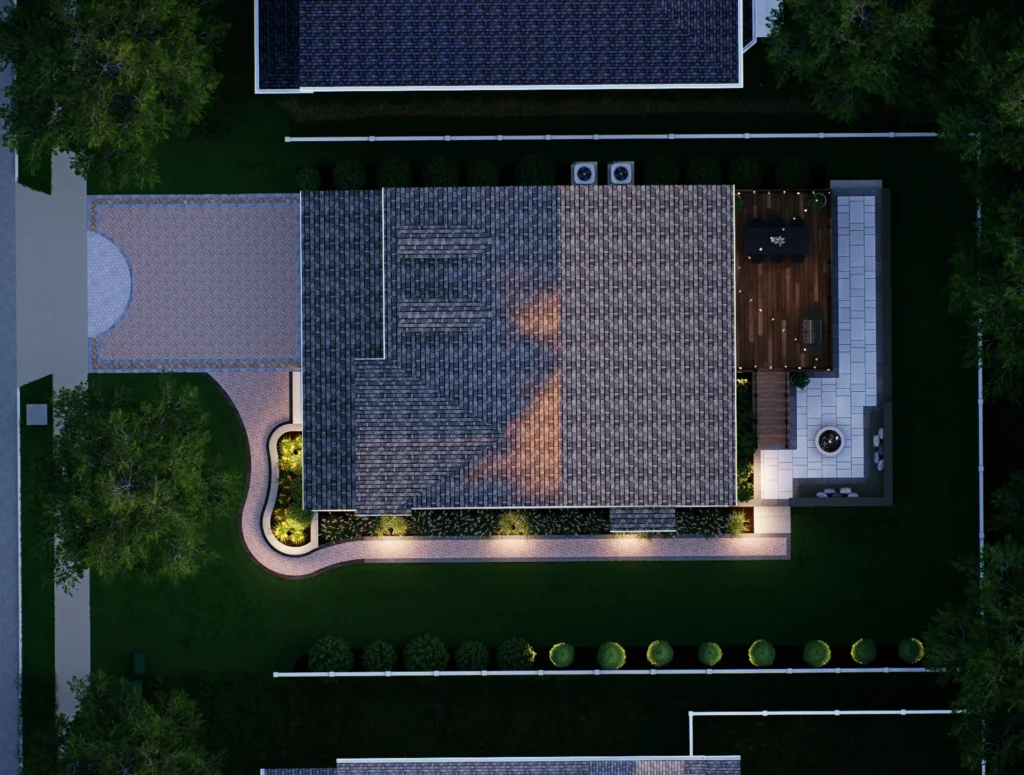
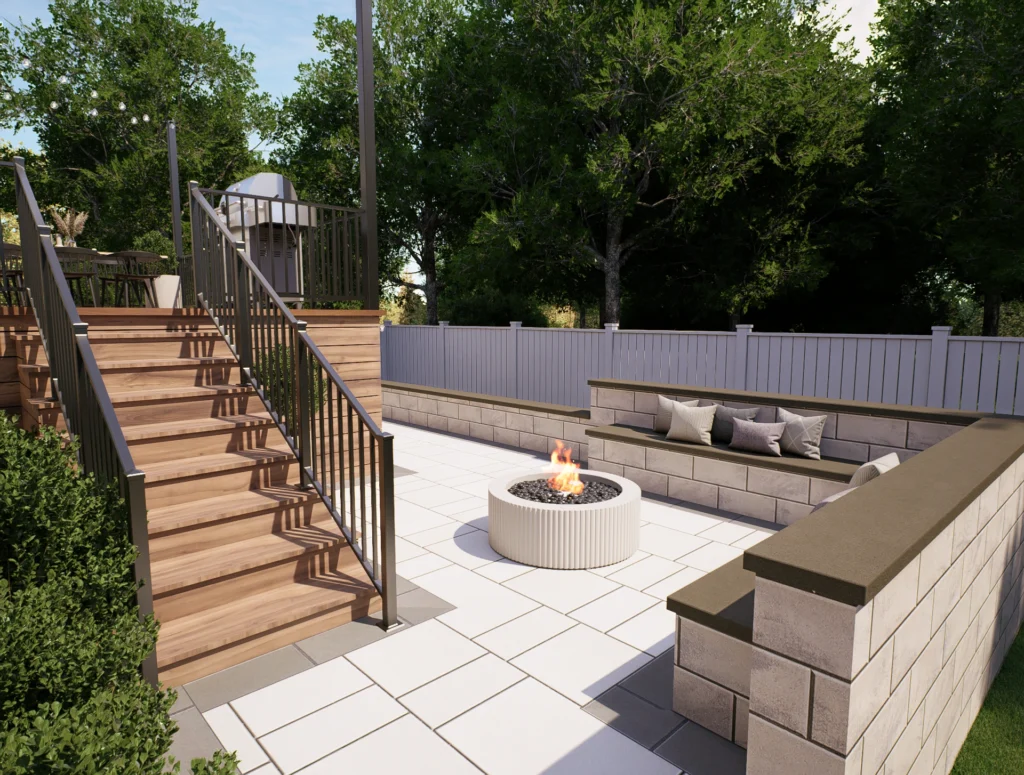
GreenGrove Outdoors integrates environmentally responsible landscaping practices into every design. We prioritize native plants, smart irrigation systems, water-efficient landscaping, and eco-friendly installation methods that reduce maintenance while improving long-term landscape performance.
Our sustainable approach helps commercial properties reduce water consumption, improve environmental stewardship, and create healthier outdoor spaces that thrive year after year.
Personalized landscape plans tailored to your property's architecture, functionality, and visual goals.
Professional outdoor environments designed to improve curb appeal and customer experiences.
Expertly selected trees, shrubs, flowers, and ornamental plants suitable for Monmouth County conditions.
Beautiful gardens featuring seasonal color, native plants, pollinator-friendly landscaping, and sustainable design.
Patios, gathering spaces, seating areas, pathways, and landscape enhancements designed for functionality and enjoyment.
Upgrade outdated landscapes with modern designs, fresh plantings, and improved functionality.
A planting plan that works in north Jersey will not necessarily work here. Monmouth sits in a specific set of conditions: a moderating ocean, a coastal-plain soil that changes as you move inland, salt spray in the shore towns, and a deer population that treats most new plantings as a delivery. Designing around those four things, rather than around a catalogue, is what makes a landscape still look good in its third season.
Monmouth County sits in USDA hardiness zone 7 — 7a across the inland townships and 7b in the shore towns, where the ocean holds off the coldest nights. In practice that gives a growing season of roughly two hundred days, with the last spring frost usually in the first half of April and the first autumn frost toward the end of October. The moderation cuts both ways: a shore property can carry plants that would not survive twenty miles inland, and it also takes wind and salt that inland properties never see.
Toward the water the soil is sandy and fast-draining — easy to dig, quick to warm in spring, quick to dry out in July, and inclined to let nutrients leach straight through. Inland, around Freehold, Englishtown and Colts Neck, it gets heavier and holds water, which suits some plants and drowns others. We test rather than assume, and we amend to suit the plants chosen rather than settling for plants that merely tolerate whatever happens to be there.
This is the single biggest practical constraint on planting in Monmouth County, and the one most often left out of a design. Deer pressure here is heavy and year-round, and it is worst on exactly the wooded-edge properties that most want a lush landscape. There is no plant a hungry deer will not sample, but there is a wide and genuinely attractive palette they consistently leave alone: boxwood, Japanese pieris, inkberry holly, ornamental grasses, lavender, Russian sage, catmint, hellebore, ferns, and daffodils in place of tulips. The reverse list matters just as much — hosta, daylily, yew and arborvitae are the four most likely to be stripped to sticks by March, and arborvitae is still sold as a privacy screen across the county every spring.
In Sea Bright, Monmouth Beach, Long Branch, Avon-by-the-Sea and the rest of the shore strip, wind-carried salt burns foliage and salt in the soil kills roots. The plants that thrive there are largely the ones that grow on the dunes anyway: bayberry, beach plum, rosa rugosa, switchgrass, little bluestem, juniper and inkberry. A shore planting built from that palette needs a fraction of the replacement a conventional suburban plan does.
Native plants are not only an environmental preference here; they are the practical choice, because they evolved in this soil and this rainfall pattern and need less intervention to stay alive. A New Jersey native planting also feeds the pollinators and birds that a lawn does not.
The species that perform most reliably on Monmouth properties include switchgrass and little bluestem for structure and winter movement; purple coneflower, black-eyed Susan, bee balm, butterfly weed and Joe-Pye weed for a long summer of colour and pollinator traffic; and serviceberry, sweetbay magnolia, summersweet and winterberry holly at the shrub and small-tree layer.
The most common weakness in an existing landscape is that it peaks for three weeks in May and does nothing for the rest of the year. A design that carries all four seasons layers bulbs for early spring, perennials that hand off to one another from June through September, ornamental grasses that come into their own in October and hold their shape through winter, and the winter structure that only evergreens, bark and berry provide. Winterberry holly against snow does more for a January view than anything else you can plant.
A commercial landscape is judged on different criteria than a private garden. What matters on an office campus, a retail centre or an HOA community is that the property reads as maintained on every day of the year, from a moving car — not that any one bed is spectacular in June.
That changes the design. Massing beats variety, because a hundred of one plant reads clearly at thirty miles an hour and a hundred different plants read as noise. Sightlines at entrances and intersections have to stay clear as things mature, which is a decision made at specification rather than with a hedge trimmer three years later. Snow needs somewhere to be pushed that will not kill what is planted there, and the beds along drives and walks have to survive whatever de-icer is used on them. On an occupied property the work also has to be phased so that parking, access and operations keep running while it happens.
These are the properties where a design’s real cost lands in the maintenance budget rather than the installation invoice, and where getting the plant selection right the first time pays for itself repeatedly. Ongoing care for these sites falls under commercial landscape management.
There are two strong windows here. Spring, from April into June, is the obvious one. Autumn, from September into November, is often the better one for trees and shrubs: the soil is still warm enough for roots to establish while the air is cool enough that the plant is not simultaneously trying to support a full canopy in heat. A shrub planted in October has an entire dormant season to root before it is asked to do anything.
Summer installation is routine and perfectly possible, but it lives or dies on watering — a July planting without a reliable irrigation plan is a July planting that gets replaced. Hardscape construction, by contrast, runs later into the year than planting does, so a project combining the two is usually sequenced with the hardscaping built first and the planting following in the next good window. Where a property has standing water or runoff to resolve, that comes before either — see drainage solutions. Finished projects across the county are in our project gallery.
There is no useful flat number, but the drivers are predictable. Property size matters less than how much of the property is actually being planted. The single biggest lever is plant size at installation: the same tree at a three inch caliper costs several times what it does at an inch and a half, and it will be the largest line on most plans. After that it is site preparation, meaning drainage, soil work, and removing what is already there, then access for equipment, and whether the installation is phased across seasons. Design is normally a separate and much smaller line than installation. We price after walking the property, because guessing at soil and access is how estimates go wrong.
Deer pressure is the single biggest constraint on planting through much of this county, and it is the reason plenty of otherwise good designs fail in their second year. Plants that generally hold up include boxwood, Japanese pieris, spirea, ornamental grasses, Russian sage, catmint, lavender, bayberry, and inkberry holly.
The reliable losses are hosta, daylily, yew, and arborvitae. That last one is worth knowing, because arborvitae is still sold as a privacy screen every spring and is routinely stripped to bare sticks by March. One caveat on all of it: deer resistant is not deer proof. A hungry herd in late winter will eat things it walked straight past in June.
Most of Monmouth County sits in USDA zone 7a, with the shore edge running into 7b because the ocean moderates winter lows. The growing season is roughly two hundred days. The practical caution is that the zone number on a plant tag is a floor rather than a promise: something rated for zone 7 will still fail in a windy, exposed, poorly drained spot, and microclimates on a single property can differ by more than the gap between 7a and 7b. Where a plant sits on your lot often matters more than the zone it is rated for.
Salt exposure is a real design constraint within roughly a mile of open water, and it shows up again along roads that get heavily de-iced. Bayberry, beach plum, rugosa rose, inkberry, juniper, switchgrass, little bluestem, and Russian sage all tolerate it well.
The second half of the shore problem is the soil. Sandy coastal ground drains fast and holds very little nutrient, so plants that want steady moisture struggle even where salt is not the issue. Planting near the water usually means solving for both at once rather than treating them as separate problems.
Yes, where they suit the site. Natives adapted to this coastal plain generally need less water and less intervention once established, and they support local pollinators and birds in a way that a purely ornamental collection does not. Inkberry holly, bayberry, sweetspire, switchgrass, little bluestem, joe-pye weed, black-eyed Susan, and serviceberry all do well here. Worth saying plainly though: native does not automatically mean low maintenance or deer resistant. It has to be the right native for the soil, light, and moisture on your particular property, or it struggles like anything else.
Autumn, for most woody plants. The soil stays warm well after the air cools, so roots keep growing after the top of the plant has gone dormant, rainfall is more dependable, and the heat stress that kills spring plantings is over. That gives a tree or shrub a full season of root establishment before it faces its first summer. Spring planting works, but the window is narrow and a dry June is punishing for anything that went in late. Perennials are more forgiving either way, and container stock can go in through most of the season as long as someone is watering it.
Yes, including office parks, retail centers, HOA communities, and healthcare facilities. The priorities are genuinely different from residential work. Planting has to read at driving speed rather than walking speed, which means massing and repetition instead of specimen variety. Sightlines at entrances and drives are a safety requirement, not an aesthetic preference. Snow storage has to be planned so plowed piles are not landing on beds that will be salt burned by March. And the work is usually phased to fit a budget cycle rather than installed in a single pass.
Yes. Our licensed irrigation technicians handle design and installation. The part that determines whether a system actually helps is zoning: heads grouped by what the plants need and how much sun an area gets, rather than by whatever was convenient to pipe together. Turf and planting beds want very different amounts of water on very different schedules, and putting them on one zone guarantees that one of them is wrong. Drip in the beds, spray on turf, a controller with a working rain sensor, and required backflow prevention are the pieces that matter.
Design is usually a couple of weeks from the first site visit to a plan worth reviewing, and longer where grading or survey information has to be gathered first. Installation ranges from a few days for a planting refresh to several weeks where grading, drainage, or hardscape are part of the scope. The scheduling factor people underestimate is plant availability. Specific sizes and varieties are not always sitting in a yard waiting, and sourcing a particular tree at a particular caliper can add weeks that have nothing to do with how long a crew is on site.