Backyard Patio Design
A well-designed backyard patio can be the single highest-impact addition you make to your property: more usable space, better entertaining, and a noticeable bump in resale value. But a patio that’s poorly planned can also become an expensive disappointment, whether that means too little room for your furniture, drainage issues, or a layout that just doesn’t flow with the rest of your yard.
After building hundreds of paver patios across Tinton Falls and the New Jersey shore area, our team has developed a clear process for getting backyard patio design right the first time. Here’s exactly how to plan yours.
Step 1: Define How You’ll Actually Use the Space
Before looking at a single paver sample, get specific about function. Will this patio be primarily for:
- Dining and entertaining large groups?
- A quiet morning coffee nook?
- Surrounding a pool?
- Hosting a fire pit or outdoor kitchen?
The intended use drives almost every other decision: size, shape, proximity to the house, and even material choice. A patio meant for heavy dining-table traffic needs different proportions than a small reading nook tucked into a garden corner.
Step 2: Measure and Map Your Space
Walk your yard and identify:
- Sun exposure throughout the day (a south-facing patio may need shade structures)
- Existing trees, slopes, or drainage paths you’ll need to work around
- Distance from the house (closer patios tend to get used more often)
- Any utility lines or septic systems that limit excavation
This is also the point where a professional site evaluation pays for itself. Catching a drainage issue or grading problem before construction starts is far cheaper than fixing it after the pavers are already down.
Step 3: Choose Your Patio Material
Material choice affects cost, durability, and style. Common options include:
- Concrete pavers (like Techo-Bloc). Durable, available in dozens of colors and textures, and easier to repair individual sections if needed.
- Natural stone (flagstone, bluestone). A premium, organic look with high durability, typically at a higher price point.
- Poured concrete. Budget-friendly but less repairable and prone to cracking over time.
- Permeable pavers. Ideal for properties with drainage concerns, allowing water to filter through naturally.
We typically recommend Techo-Bloc pavers for most NJ residential projects, thanks to their durability against freeze-thaw cycles and a wide range of design options that pair well with both modern and traditional home exteriors.
Step 4: Plan the Layout and Flow
A great patio doesn’t exist in isolation. It should connect naturally to your home and the rest of your landscape. Consider:
- A clear walkway connecting the patio to your back door
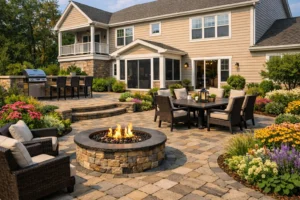
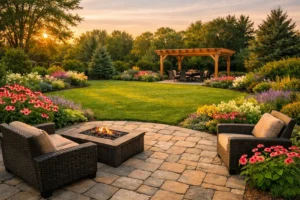
- Defined “zones” within larger patios (dining area, lounge area, fire pit area)
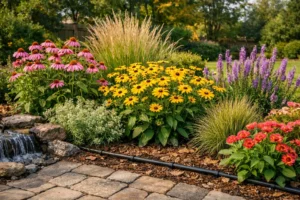
- Softscape borders (plantings) that frame the hardscape and soften hard edges
- Sightlines: where will people look from inside the house, and does the patio enhance that view?
This is where combining landscape and hardscape design really pays off, since plant placement and patio layout need to be considered together for a cohesive final result.
Step 5: Factor in Drainage From the Start
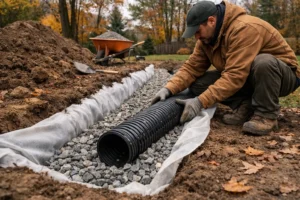
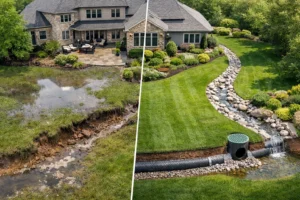
This step gets skipped more than any other, and it’s the most expensive mistake to fix later. Pavers must be installed on a properly graded, compacted base with drainage built in. Otherwise you risk standing water, heaving pavers, and erosion underneath the patio within just a few years.
As an NDS Certified Drainage Contractor, we build drainage planning into every patio project from day one, helping your investment hold up through New Jersey’s freeze-thaw winters and heavy spring rains.
Step 6: Add Lighting and Smart Features
Modern patios increasingly include integrated lighting, outdoor audio, and even smart irrigation for surrounding plant beds. Low-voltage path lighting and uplighting on nearby trees extends usability into the evening and adds a layer of safety for nighttime gatherings.
Step 7: Get a Detailed, Itemized Quote
Before any work begins, a reputable contractor should provide a full breakdown of materials, labor, and timeline, not a vague estimate. This protects you from surprise costs and gives you the chance to adjust scope (materials, size, add-ons) before committing.
How Long Does Patio Installation Take?
Timeline varies based on size and complexity, but most residential paver patios take anywhere from one to three weeks once excavation begins, factoring in base preparation, drainage work, paver installation, and any additional features like fire pits or seat walls. Weather and site accessibility can also affect scheduling, particularly for larger New Jersey shore properties.
For broader research on patio design trends, the American Society of Landscape Architects publishes useful resources on outdoor living trends nationwide.
Bring Your Backyard Patio to Life
Planning a backyard patio is exciting, but the details matter, from drainage and grading to material selection and layout. GreenGrove Outdoors has been building custom paver patios for New Jersey homeowners since 2012, with an in-house team that handles design, drainage, and construction from start to finish.
Check out real completed patio projects in our Featured Work gallery, then schedule your free consultation to start planning your own. Call (732) 493-8093 or email info@ggoutdoors.net today.